

Ford sells five SUVs a family in Grande Prairie might reasonably shop: Bronco Sport, Escape, Bronco, Explorer and Expedition. Two of them have three rows. The rest of the decision comes down to how many car seats you’re installing, what you carry through a Peace Country winter, and whether there’s a trailer behind you on the way to the lake.
This guide walks the lineup from smallest to largest, then puts it back together as a set of picks by situation — because “best family SUV” has no single answer, but “best family SUV for a couple with two kids in car seats, a dog and a utility trailer” does.
Start with the seats, not the badge
Almost every family SUV mistake starts with shopping by size or price instead of by seating. Three questions settle most of it:
How many people ride every single day? Not on the busiest weekend of the year — every day. If the answer is four or five, a two-row SUV is very likely the right vehicle, and the money saved goes into equipment you’ll use daily instead of seats you won’t.
How many car seats, and what kind? In Canada the lower anchors are called the Universal Anchorage System (UAS), and they’re paired with a top tether. Rear-facing seats eat second-row legroom, which matters most for whoever sits in front of them. Three car seats across a second row is where compact SUVs run out of width — bring the seats to the lot and try the install before you commit.
Does anyone have to climb past a car seat? This is the question that quietly forces the third-row decision. Getting a child into a third row usually means tilting or sliding the second row, and an installed car seat in that spot makes it awkward. Second-row captain’s chairs solve it by opening a walkway, at the cost of a seating position.
Sort those out and the list gets short quickly.
The five-SUV lineup at a glance
| SUV | Rows | Who it suits | What it gives up |
|---|---|---|---|
| Bronco Sport | 2 | Small households who want off-road ability and easy parking | Rear-seat and cargo room; not a towing vehicle |
| Escape | 2 | Commuters and small families doing lots of in-town driving | Off-road hardware; three-row flexibility |
| Bronco | 2 | Drivers whose weekends are the point of the vehicle | Ride comfort, quiet, everyday practicality |
| Explorer | 3 | The default family vehicle: three rows plus real towing | Fuel and parking versus a compact SUV |
| Expedition | 3 | Big families, big loads, and the heaviest trailers | Size, price and fuel |
Bronco Sport: small footprint, northern-Alberta attitude
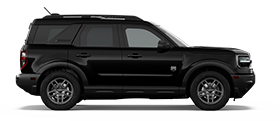
Bronco Sport is a compact crossover with Ford’s off-road thinking layered on top — including the G.O.A.T. drive modes (“Goes Over Any Type of Terrain”) that retune throttle, braking and traction for sand, mud, snow and slippery pavement. It’s tall enough to see out of, short enough to park downtown, and genuinely useful on a gravel lease road or a snowed-in campsite approach.
It suits a couple, a small family with one or two kids, or anyone whose SUV is mostly for them and occasionally for everyone else. What it is not is a hauler: the back seat is fine for kids and tight for adults, the cargo hold is compact, and a trailer beyond a small utility box is the wrong ask.
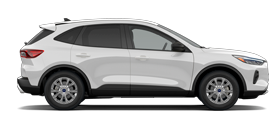
Escape: the practical, efficient one
Escape is the most car-like SUV in the lineup and the easiest one to live with in town. It rides and steers like a hatchback, parks anywhere, and it’s the family SUV where fuel economy is genuinely part of the argument — Escape is offered with a hybrid powertrain, which is the powertrain that pays off most in stop-and-go driving rather than on the highway. If that’s the direction you’re leaning, the EV and hybrid guide explains what a hybrid actually does and what it doesn’t.
Choose Escape when the driving is mostly commuting, school runs and errands, when there are no more than three in the back, and when the towing conversation is “occasionally, and it’s small.”
Bronco: the weekend vehicle that can commute
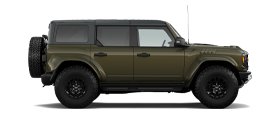
Bronco is a body-on-frame off-roader offered in two- and four-door bodies, with removable roof panels and doors. It is a legitimate family vehicle in four-door form — but you should want it for what it is. The trade-offs are real: more wind and road noise than a crossover, a firmer ride, and a two-door version where rear-seat access with a car seat installed is a daily annoyance.
If your family’s weekends happen at a trailhead, a lake or a hunting camp and the SUV is part of the point, Bronco is the one that earns it. If the SUV is transportation between those weekends, look at Bronco Sport or Explorer.
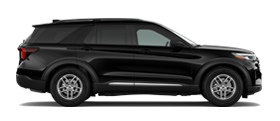
Explorer: the default answer
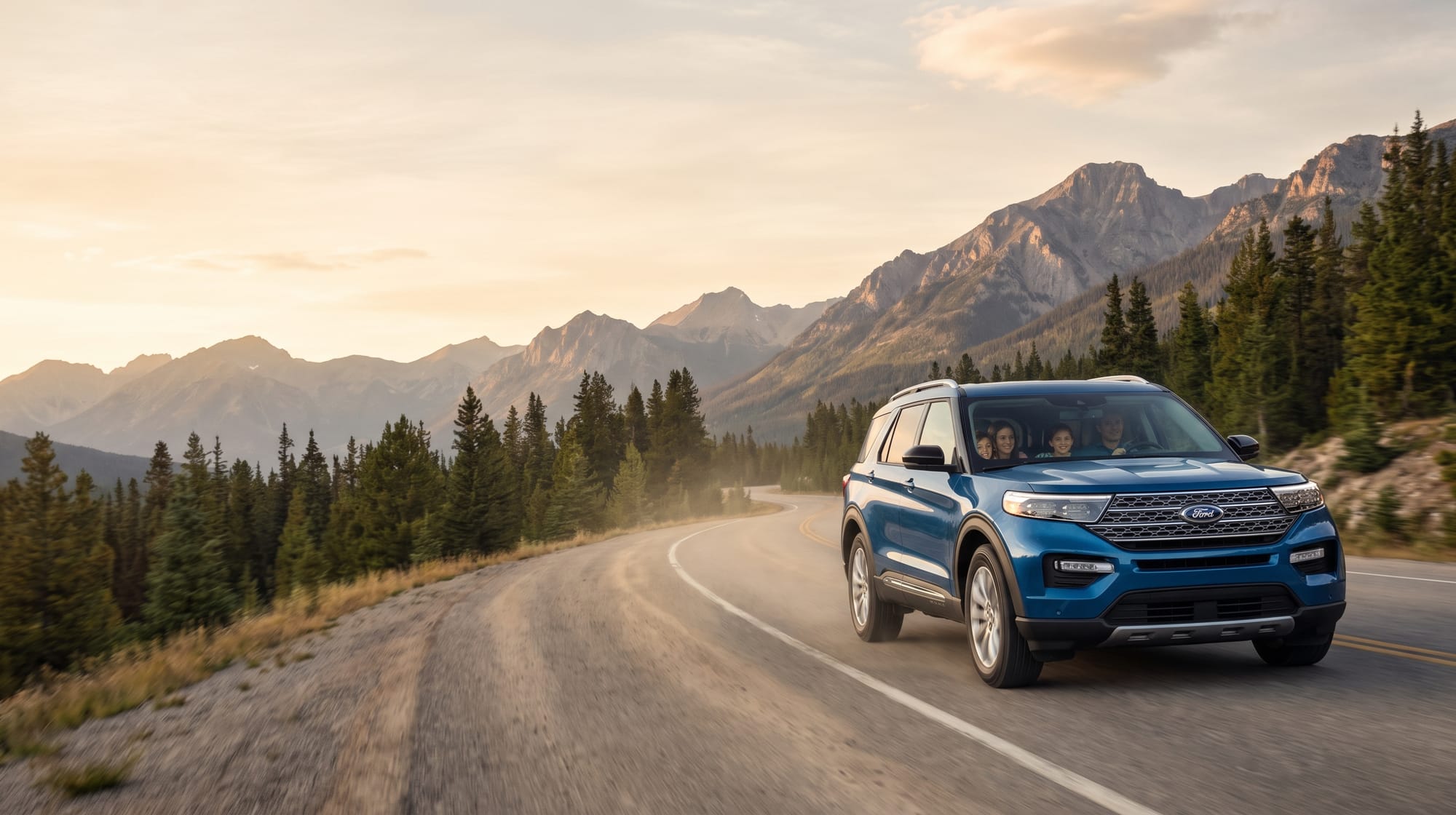
Explorer is the vehicle most Grande Prairie families land on, and for good reason. It has three rows, all-wheel-drive availability, a second row big enough for adults and car seats, cargo space behind the second row that swallows a Costco run, and enough towing capability to put a boat or a small trailer behind it without shopping for a truck.
The honest limitation is cargo behind the third row. With all seven seats up, a midsize three-row SUV carries groceries and hockey bags — not a family’s luggage for a week. If the third row lives folded most of the time, that’s not a problem; if it’s up every day and you’re loaded to the roofline, keep reading.
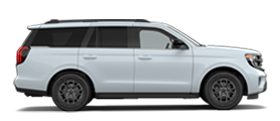
Expedition: when you need seats and cargo at the same time
Expedition is the full-size, body-on-frame SUV, and it exists for two situations: three rows plus real cargo behind them, and towing something heavy with the whole family aboard. It’s the SUV for the family of six or seven that also takes a holiday trailer to the mountains, or the crew that hauls gear as often as it hauls people. Ford has long offered a longer-bodied version of the Expedition for exactly this reason — ask about it if you’re routinely loaded past the third row.
The costs are the obvious ones: purchase price, fuel and a footprint you feel in a parkade. If you don’t need what it does, you’ll notice all three.
Pick by situation
These are starting points, not verdicts. The right answer still depends on the specific unit’s equipment and rating.
Two adults, one or two kids, mostly in town. Escape — or Bronco Sport if you spend real time on gravel and snow. Both park easily and both handle a Peace Country winter on proper tires.
Two adults, three kids, one dog. Explorer. The second row and the cargo hold behind it are the reason, not the third row.
Kids plus their friends, grandparents, or a carpool. Explorer with the third row up, and a hard look at second-row captain’s chairs so nobody has to climb over an installed car seat.
Six or seven people and their luggage. Expedition. This is the situation a midsize three-row can’t solve.
Boat, sled trailer or holiday trailer in the picture. Explorer for lighter loads, Expedition for heavy ones — and check the tow rating and payload label on the actual vehicle before you buy the trailer. If the trailer is the main event, the honest answer may be a truck: start with the F-150 buyer’s guide.
Weekends outdoors, weekdays commuting. Bronco four-door if capability and the roof come first, Bronco Sport if the commute wins.
You mostly need a back seat and an open box. Look at the Maverick instead. Plenty of “family SUV” shoppers actually want a small truck with a rear seat.
Do you really need a third row?
Third rows are the most oversold feature in the segment. They cost you cargo space, fuel and parking ease every day, in exchange for capacity you may use monthly. A useful test: over the last year, how many times did you need a sixth seat? If the answer is under a dozen, a two-row SUV with a big cargo hold — plus a second vehicle or a rental for the rare trip — is usually the better daily vehicle.
Where a third row genuinely pays off: carpools, families of six or more, blended families, anyone regularly driving grandparents, and anyone who tows and needs to bring everyone along.
Towing the trailer to the lake
The towing conversation splits the lineup cleanly. Explorer and Expedition are the two designed with a trailer in mind; Bronco and Bronco Sport are sized for lighter loads.
Three things decide whether a given SUV can pull your trailer, and none of them is the badge on the tailgate:
- The rating on that vehicle. Drivetrain, axle and factory tow equipment all move it. Two identically badged SUVs can be rated differently.
- Payload, not just tow rating. Passengers, cargo, roof gear and the trailer’s tongue weight all come out of the same number, and a full family plus a loaded trailer tongue can hit it before the tow rating is anywhere close. The payload label lives on the driver’s door jamb of the actual vehicle.
- The hitch and brake setup. A trailer heavy enough to matter needs a properly rated hitch and, in most cases, a trailer brake controller.
Bring us the trailer’s loaded weight and we’ll check it against the specific unit rather than a brochure maximum.
Winter equipment worth insisting on
A family SUV in the Peace Country lives outside for six months. The equipment that changes your mornings:
- All-wheel or four-wheel drive. The default here, and the resale market treats it that way.
- Winter tires. All-season and all-terrain tires are not winter tires. Budget a set on a second set of wheels — it’s the single biggest safety upgrade available on any of these vehicles.
- Remote start, so the cabin and the glass are ready before the kids are.
- Heated front seats and a heated steering wheel, and heated rear seats if there are teenagers back there.
- A heated windshield-wiper zone, which stops the wipers freezing to the glass.
- A block heater on gas models, and a plug you can actually reach.
- Underbody washing through the season. Road salt and calcium are hard on fasteners and brake hardware.
Where to go from here
Narrow it to two vehicles on paper, then settle it in the seats. Bring the car seats, bring whoever rides in the back, and try the third row with the second row where you’d actually leave it.
Browse the SUV inventory at Windsor Ford in Grande Prairie, talk to us about financing, or send us the details — the number of car seats, the trailer, the commute — and we’ll tell you which two of the five are worth your time.