











Ford’s electrified lineup covers two very different ideas, and most of the confusion around EVs starts with treating them as one thing. A battery-electric vehicle has no gas engine at all: you plug it in, and that’s how it gets its energy. A hybrid uses a gas engine and an electric motor together and never needs a plug — you fuel it exactly like any other vehicle.
That distinction decides almost everything else: what you have to change about your driveway, what a cold snap does to your morning, and what you should be asking about on the lot. This hub covers what Windsor Ford sells in each category, what northern Alberta does to both, and where to read further.
Battery-electric versus hybrid, in plain terms
Battery-electric (BEV). All of the vehicle’s energy comes from a battery you charge from the grid. No engine, no oil changes, no exhaust. Nearly silent, and quick from a standstill because an electric motor makes its torque immediately. In exchange, refuelling is something you plan: mostly at home overnight, occasionally at a public fast charger on a trip. Ford’s BEVs here are the Mustang Mach-E and the E-Transit version of the Transit van.
Full hybrid. A gas engine and an electric motor work together, and the battery recharges itself from braking and engine load. There’s nothing to plug in, and no range question — it’s a gas vehicle that uses less gas, especially in stop-and-go driving. Ford’s hybrids here are the F-150 PowerBoost, the Maverick hybrid and the Escape hybrid.
Plug-in hybrid (PHEV). A hybrid with a bigger battery that you can plug in, giving a stretch of electric-only driving before the gas engine takes over. Ford has offered plug-in variants of some models; whether one is available in the trim you want changes by model year, so ask which powertrain is actually in the vehicle you’re looking at rather than assuming from the badge.
The short version: if the plug is a problem, a hybrid is your answer. If the plug is easy, a BEV is worth a serious look.
Ford’s electrified lineup at Windsor Ford
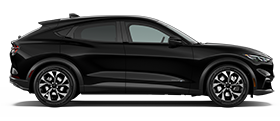
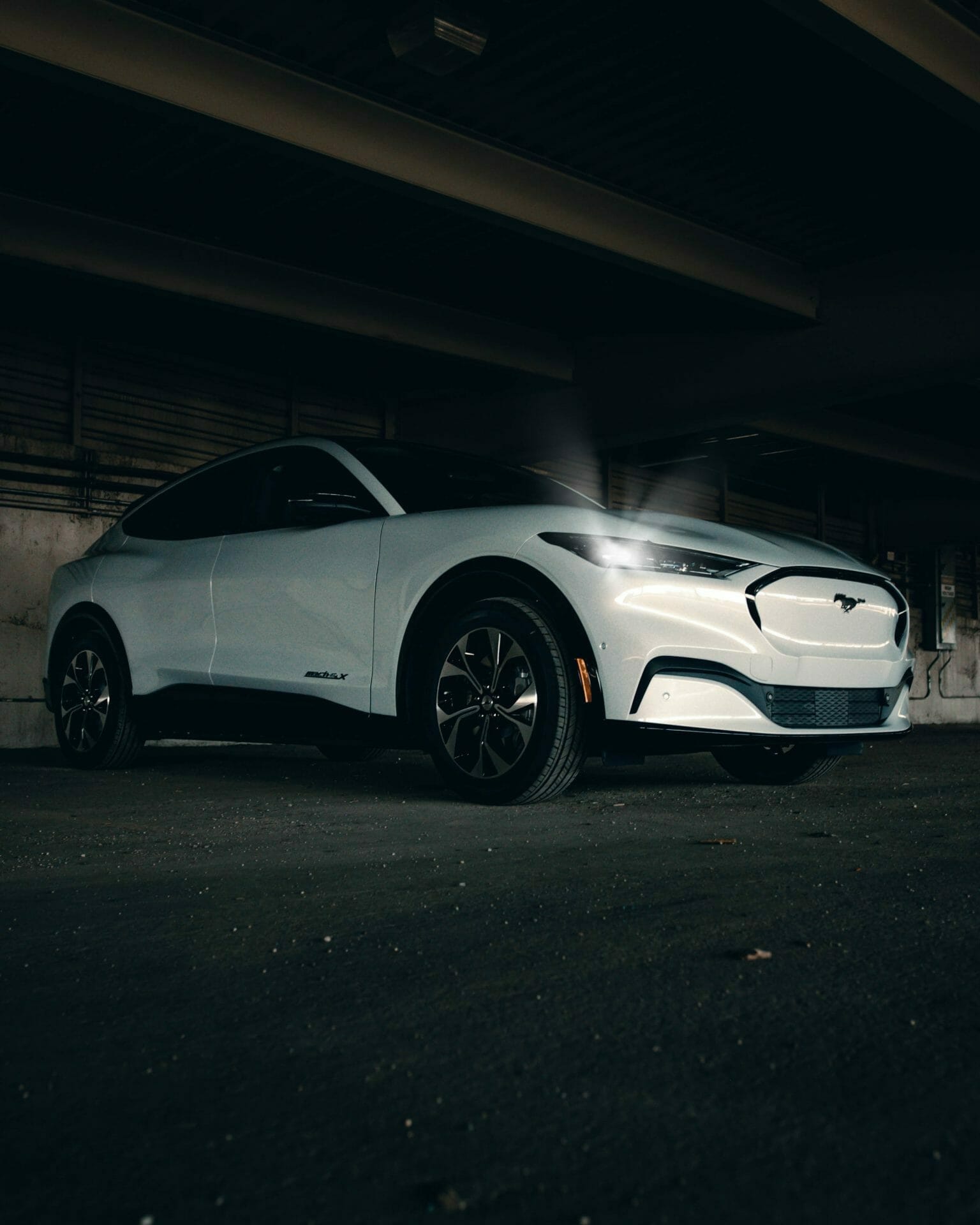
- Mustang Mach-E — fully electric. The battery-electric SUV, and the vehicle most people mean when they ask us about “the Ford EV.” All-wheel drive is available, which matters here.
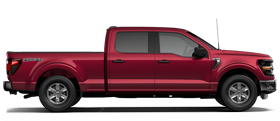
- F-150 PowerBoost — full hybrid. A hybrid half-ton that still tows and works. Its headline feature isn’t fuel economy, it’s Pro Power Onboard: the truck doubles as a generator. The F-150 buyer’s guide covers where PowerBoost fits against the other engines.
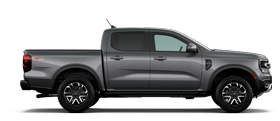
- Maverick hybrid — full hybrid. The compact pickup, and the most efficient way to own something with an open box.
- Escape hybrid — full hybrid. The efficient small SUV for families whose driving is mostly in town, where a hybrid does its best work. If you’re cross-shopping SUVs generally, start with the family SUV guide.
- E-Transit — fully electric. The battery-electric Transit cargo van, aimed at fleets and trades running predictable local routes and parking at the same yard every night. The Commercial Vehicle Center is the place to start on that one.
Availability moves with what’s physically on the ground. Check the current lineup or ask us to hunt for a specific configuration.
Which one fits how you actually drive?
You commute in town, park at home, and rarely leave the region. A battery-electric vehicle fits this pattern best. You plug in at home, start every day full, and never visit a gas station.
You drive long highway distances on short notice. A hybrid removes the planning entirely. You get better fuel economy without ever thinking about charging infrastructure.
You tow, haul or work out of the vehicle. The F-150 PowerBoost is the electrified option built for that, and the onboard generator is a genuine tool rather than a feature list item.
You run a fleet on a fixed daily route. E-Transit is designed for exactly this: predictable daily distance, overnight charging at one location, and much lower running costs than a gas van. Talk to the Commercial Vehicle Center.
You want lower fuel bills and no new habits. Escape or Maverick hybrid. This is the lowest-friction way to cut fuel use.
What cold actually does to an EV
This is the honest part, and it’s the question we get most often. Cold affects a battery-electric vehicle in three ways:
- Range drops. Battery chemistry is less efficient when it’s cold, and — a bigger factor — there’s no waste engine heat to warm the cabin, so heating comes out of the same battery that moves the vehicle. Plan a winter buffer well beyond what a warm-weather number suggests.
- Charging slows. A very cold battery can’t accept energy as quickly. The vehicle will often warm the battery first, which takes time and energy of its own.
- The first few kilometres cost the most. Warming a cold cabin and a cold battery is front-loaded work. Short winter trips from cold soak are the least efficient driving an EV does.
What owners do about it is straightforward, and it’s mostly the same set of habits that make any vehicle better here:
- Park inside if you can. A garage that stays a few degrees above outside temperature changes both range and charging behaviour.
- Leave it plugged in when parked. The vehicle can keep the battery in a healthy temperature range using wall power rather than its own charge.
- Precondition while plugged in. Warming the cabin — and, on models that support it, the battery — before you unplug means you leave with a warm car and a full battery instead of spending range on heat.
- Use the heated seats and steering wheel. They draw far less energy than heating the whole cabin, which is why EVs tend to have generous versions of both.
- Run winter tires. Same rule as any vehicle here, and an EV’s instant torque makes good tires more valuable, not less.
Hybrids sidestep most of this. They still lose some efficiency in deep cold — the gas engine runs more to keep the battery and cabin warm, so the fuel-economy advantage shrinks — but there’s no range planning involved.
Charging is the deciding question
For a battery-electric vehicle, everything comes down to where it sleeps. Owners who can charge at home overnight almost never think about charging; owners who can’t, think about it constantly.
The practical setup is a 240-volt Level 2 circuit in a garage or carport, installed by a licensed electrician. A standard 120-volt household outlet (Level 1) will also charge an EV, slowly — enough for a short commute or to top up a plug-in hybrid, not enough to refill a large battery overnight.
Public DC fast charging is the road-trip tool: much faster than anything you’d install at home, but not something you want to depend on daily. Northern Alberta’s fast-charging network is thinner than what you’ll find around the bigger centres, so a long trip is worth planning around actual charger locations rather than assuming one in every town.
The home charging guide goes through Level 1 versus Level 2, what a Level 2 install involves in an Alberta house, and how charging behaves in winter.
Maintenance and running costs
A battery-electric vehicle removes a long list of maintenance items: no oil changes, no spark plugs, no exhaust, no engine air filter, no transmission service. Regenerative braking — where slowing down puts energy back into the battery — means the friction brakes do less work and pads and rotors typically last longer. What remains is tires, cabin air filter, brake fluid, coolant for the battery system, wiper blades and inspections. EVs are heavy and quick, so tires can wear faster than you’re used to.
Hybrids sit in between. They still have a gas engine with all its normal service needs, but the engine works less and regenerative braking eases the brakes, so wear items tend to last well. Ford covers hybrid and electric components under a longer warranty than the rest of the vehicle — ask us for the exact coverage on the model and year you’re considering, because it varies.
Rebates, incentives and the fine print
Federal and provincial programs for electric vehicles change, get paused and come back, and the rules differ by vehicle price and type. We’re not going to quote a number here that might be wrong by the time you read it. Before you count a rebate into your budget, confirm what’s actually active — ask us, and check what applies to the specific vehicle. Our financing team can walk through what the monthly picture looks like with and without one, alongside the fuel-cost difference, which is usually the larger number over a few years.
Where to go from here
If you’re leaning electric, sort out the charging question first — it’s the one that decides whether ownership is effortless or annoying. If you’re leaning hybrid, there’s nothing to sort out; pick the vehicle you’d want anyway and take the better fuel economy.
Read the home charging guide, browse the Mustang Mach-E, or get in touch and tell us how far you drive in a normal week. That one number answers most of this.