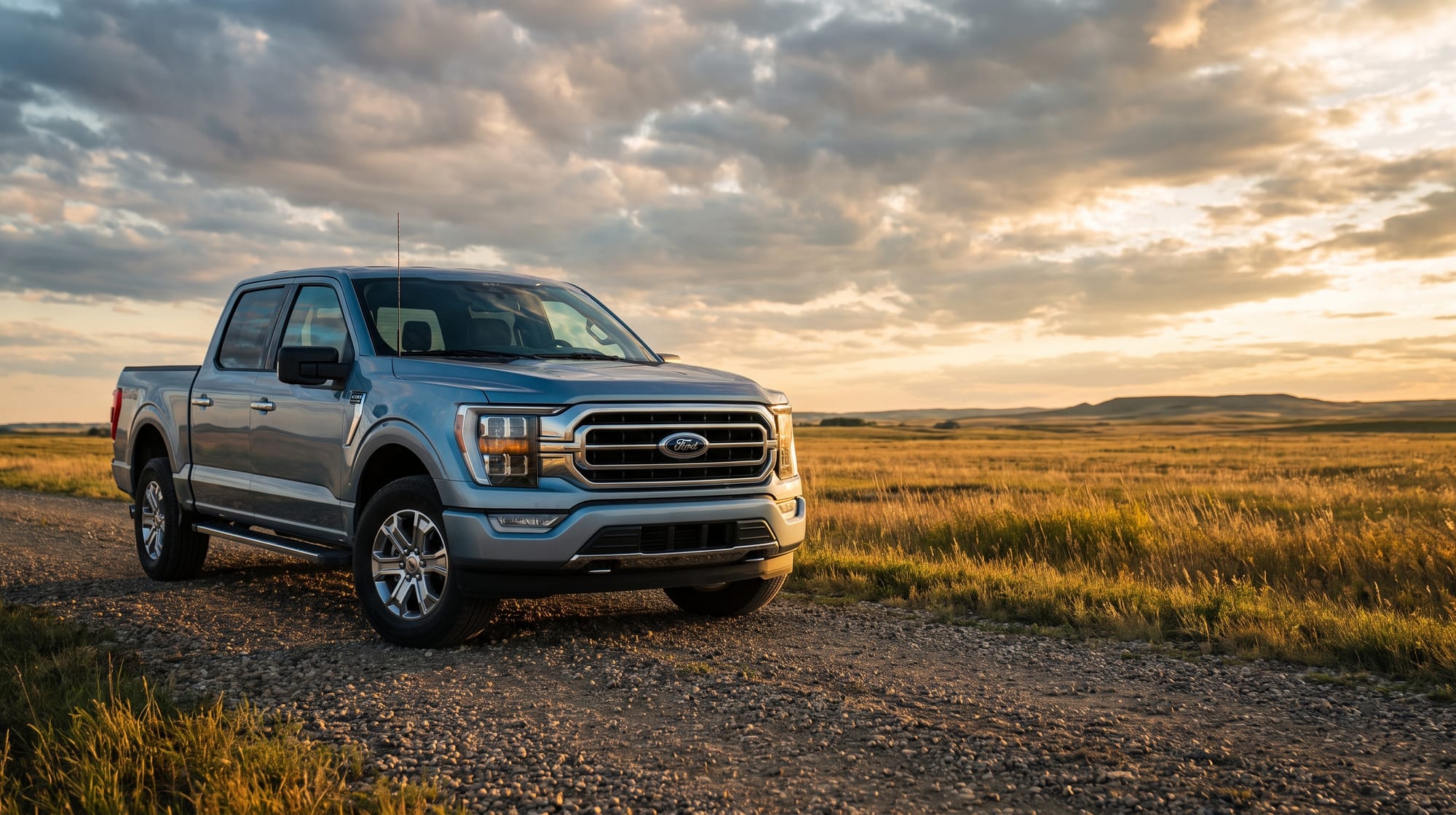
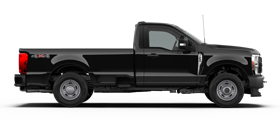
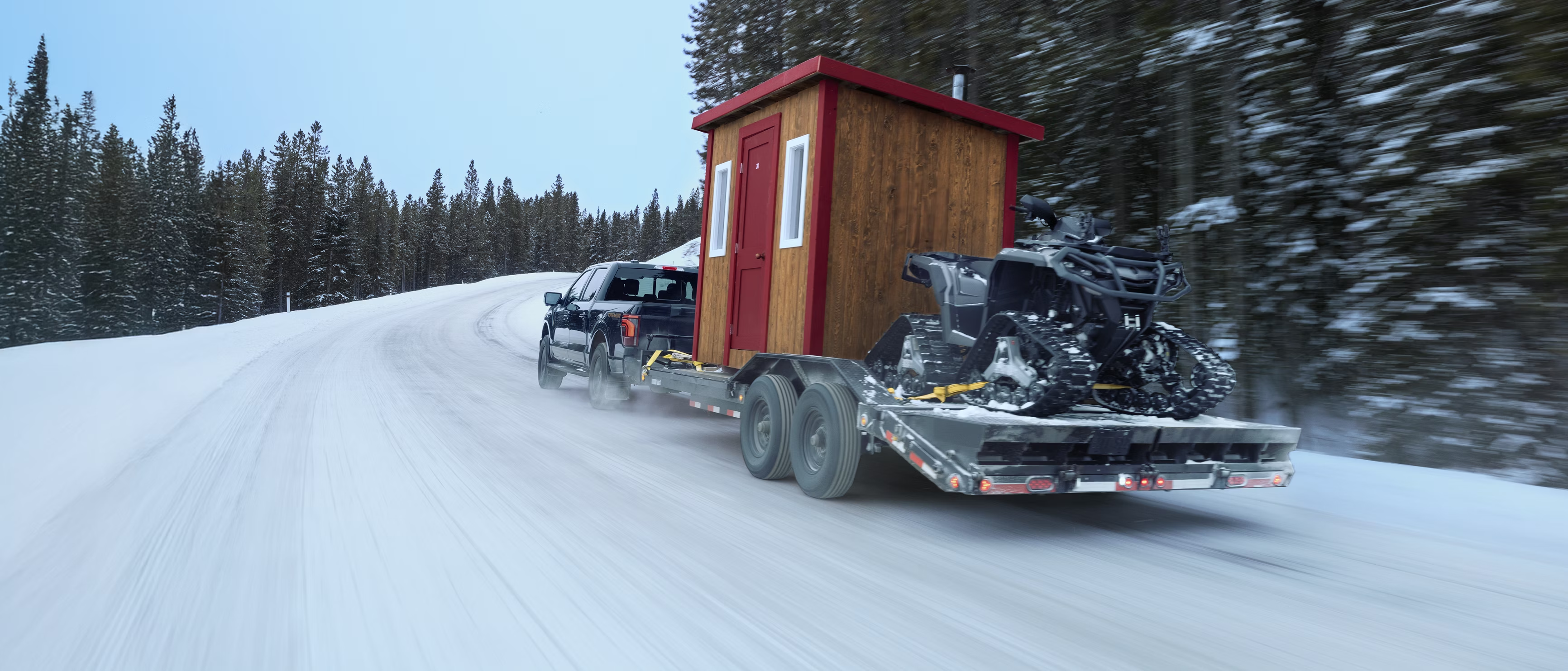
The 2026 Ford F-150 is sold in Canada in eight trims, with six engines, three cab styles, three box lengths and rear- or four-wheel drive. That range is the point: the same nameplate covers a $48,305 regular-cab work truck and a $113,420 Raptor, and a tow rating anywhere from well under 8,000 lb to 13,500 lb depending on how the truck is built.
This guide is the starting point. It covers what changed for 2026, the Canadian lineup and pricing, every engine including the PowerBoost hybrid, what the truck can tow and carry, and how to narrow eight trims and dozens of configurations down to the one that fits your work, your trailer and a northern Alberta winter. Each section hands off to a deeper Windsor Ford guide on that topic.
What’s new for the 2026 Ford F-150?
The 2026 F-150 is a refinement of the current generation, not a redesign. Ford’s additions for the model year are packages rather than new engines or body changes:
- STX Lobo Package — a street-oriented STX with a 2-inch lowered rear suspension, 22-inch gloss-black wheels and the 5.0L V8.
- XLT Chrome Appearance Package — a brightwork option for the volume trim.
- Platinum Satin Appearance Package — a satin-finish exterior treatment for Platinum.
- Ford Connectivity Package — bundled connected services, now available across more of the lineup.
Everything that made the 2025 truck work carries over: the same engine lineup, the same cab and box combinations, Pro Power Onboard, BlueCruise and Ford’s trailer-assist technology on applicable trims. If you were cross-shopping a 2025 and a 2026, the decision is about price and availability, not capability.
Which 2026 F-150 trims are sold in Canada?
Ford Canada lists eight trims for 2026. Starting MSRPs below are from Ford Canada’s Build & Price tool and exclude freight, PDI, dealer fees and tax.
| Trim | Starting MSRP (CAD) | Who it’s built for |
|---|---|---|
| XL | $48,305 | Fleet and work use; vinyl or cloth, steel wheels, the fewest options |
| STX | $49,527 | Entry price with sport appearance; home of the new Lobo Package |
| XLT | $52,026 | The volume trim: the widest engine, cab and package choice, including the max-tow build |
| Lariat | $71,974 | Leather, larger screen, BlueCruise availability; the first “premium” step |
| Tremor | $72,605 | Off-road hardware (lift, tires, locking differential) on a truck that still tows and works |
| King Ranch | $86,892 | Western-themed luxury on the same mechanical package as Lariat and Platinum |
| Platinum | $93,012 | Top mainstream luxury; Platinum Plus and the Satin Appearance Package build on it |
| Raptor | $113,420 | Long-travel desert-racing suspension; Raptor R adds the 5.2L supercharged V8 |
The lineup breaks into three groups. XL, STX and XLT are the work and value trims and account for most of what a dealer stocks. Lariat, King Ranch and Platinum share a mechanical package and differ mainly in interior and appearance. Tremor and Raptor are the off-road trims, and they solve different problems: Tremor is a capable everyday truck with off-road hardware, while Raptor is a purpose-built high-speed off-road vehicle with a 5.5-foot box only.
Which one to buy depends on the job, and the 2026 F-150 trims guide walks through each trim’s equipment, what each price step actually buys and the trim-to-trim comparisons shoppers ask about most.
How much does a 2026 Ford F-150 cost in Canada?
The starting MSRPs above are Ford’s list prices for the base configuration of each trim. The number on a bill of sale is different, and for a Canadian buyer four things move it:
- Freight and PDI. Charged on every new Ford in Canada, on top of MSRP.
- Configuration. Cab, box, engine, drivetrain and packages. An XLT SuperCrew 4x4 with the 3.5L EcoBoost and Tow/Haul Package is a very different price from the $52,026 XLT base.
- Tax. GST everywhere, plus PST, HST or QST depending on the province. Alberta charges GST only, which is one reason Alberta prices look lower than a comparable truck in BC or Ontario.
- Incentives and financing. Ford Canada’s rates and rebates change on a monthly offer cycle and are not hard-coded here; see the current Ford incentives and the 2026 F-150 price guide for what applies this month.
One Canadian-specific item: the federal Select Luxury Items Tax applies to vehicles priced above $100,000. A Raptor, Raptor R or a heavily optioned Platinum crosses that line, and the tax is calculated on the full price including options.
Which engines are available in the 2026 F-150?
Six engines are offered across the lineup. Four are the mainstream choices; two are exclusive to the Raptor.
| Engine | Horsepower | Torque (lb-ft) | Max towing (lb)* | Best suited to |
|---|---|---|---|---|
| 2.7L EcoBoost V6 | 325 | 400 | 8,400 | Daily driving, light and occasional towing, lowest cost of entry |
| 3.5L EcoBoost V6 | 382 | 500 | 13,500 | Frequent or heavy conventional towing |
| 5.0L Ti-VCT V8 | 400 | 500 | 12,800 | Buyers who want a naturally aspirated V8; STX Lobo |
| 3.5L PowerBoost Full Hybrid V6 | 435 | 578 | 11,600 | Onboard power (up to 7.2 kW), stop-and-go efficiency, strong torque |
| 3.5L High-Output EcoBoost V6 | 450 | 510 | — | Raptor |
| 5.2L Supercharged V8 | 720 | 640 | — | Raptor R |
*Maximum for a properly equipped truck with that engine. Most builds are rated lower; Raptor towing is configuration-specific and not a selling point of the model.
The short version of the engine decision:
- Mostly commuting, occasional light trailer → the 2.7L EcoBoost does the job at the lowest price and with the least weight.
- Regular heavy towing → the 3.5L EcoBoost is the only engine that reaches 13,500 lb, and it needs the Tow/Haul Package and Max Tow Axle to get there.
- Onboard electricity, or a lot of idling and city driving → PowerBoost, because the hybrid system is what enables the 7.2 kW generator.
- Specifically want a V8 → the 5.0L, which gives up some towing to the 3.5L EcoBoost but nothing in day-to-day use.
The 2026 F-150 engines guide compares them in detail, including the EcoBoost-versus-V8 and PowerBoost-versus-EcoBoost questions.
What is the PowerBoost hybrid?
PowerBoost is Ford’s full-hybrid version of the 3.5L EcoBoost V6: a 35 kW electric motor built into the 10-speed automatic, fed by a lithium-ion battery under the truck. It is rated at 435 hp and 578 lb-ft, tows up to 11,600 lb when properly equipped, and charges itself under braking and engine load — it does not plug in.
PowerBoost is not primarily an economy engine. Its real distinction is Pro Power Onboard, which on PowerBoost trucks can supply up to 7.2 kW of exportable 120 V and 240 V power from outlets in the bed — enough to run job-site tools, a camp, or essential household circuits during an outage without a separate generator. For an oilfield contractor or anyone working away from grid power, that changes the engine decision more than the fuel savings do.
The trade-offs are cost, added weight (which comes out of payload) and different behaviour in deep cold, when the gas engine runs more to keep the battery and cabin warm. The PowerBoost hybrid guide covers how it works, what it tows, what it uses and whether it pays for itself.
How much can the 2026 F-150 tow and carry?
The 2026 F-150 tows up to 13,500 lb in its maximum-towing configuration. Ford states that configuration is an XLT SuperCrew 4x4 with the 3.5L EcoBoost, 6.5-foot box, Tow/Haul Package and Max Tow Axle upgrade. Your truck’s actual rating depends on its engine, cab, box, drivetrain, axle ratio and equipment, and can be several thousand pounds lower.
Maximum available payload is 2,440 lb, again on a specific configuration. Payload is the number most buyers should look at first, because everything the truck carries counts against it:
- passengers
- cargo in the cab and box
- accessories — tonneau cover, running boards, toolbox, canopy
- hitch hardware
- the trailer’s tongue weight, typically 10–15% of the loaded trailer weight
A SuperCrew 4x4 with a family aboard and a 900 lb tongue weight can run out of payload long before it reaches its tow rating. The rating that matters is the one on the door-jamb payload label of the truck in front of you, not the maximum in the brochure.
The 2026 F-150 towing capacity guide breaks the ratings down by engine and configuration, explains the Tow/Haul and Max Tow packages, and works through the payload arithmetic for travel trailers, boats and equipment trailers.
Which cab and box should you choose?
Ford builds the 2026 F-150 in three cabs and three box lengths, but not in every combination:
| Cab | Box lengths | Rear seat | Best suited to |
|---|---|---|---|
| Regular Cab | 6.5 ft or 8 ft | None | Work trucks, fleets, anyone who needs an 8-foot box |
| SuperCab | 6.5 ft | Rear-hinged doors, occasional-use seat | Crews with gear, buyers who want a 6.5-foot box without a long wheelbase |
| SuperCrew | 5.5 ft or 6.5 ft | Full-size doors and seat | Families, daily drivers, most towing builds |
| Raptor (SuperCrew) | 5.5 ft only | Full-size | Off-road performance |
Two rules of thumb. If the back seat will carry people regularly, it’s a SuperCrew. If the truck will carry sheet goods or long equipment regularly, it’s a 6.5-foot or 8-foot box, and the 5.5-foot SuperCrew box — the most common configuration on dealer lots — is the wrong truck. The 6.5-foot SuperCrew is the compromise that also happens to be the maximum-tow configuration.
The 2026 F-150 configurations guide covers cab sizes, box sizes, the SuperCab-versus-SuperCrew decision and what each combination means for parking, towing and resale.
4x2 or 4x4?
In northern Alberta, 4x4 is the default and the resale market treats it that way. A 4x2 F-150 is lighter, slightly cheaper to buy and run, and carries a marginally higher payload rating on the same configuration, which makes it a legitimate choice for a fleet truck that lives on pavement. For a personal truck driven through a Peace Country winter, towing on gravel, or headed to a boat launch or a lease road, 4x4 is the practical answer.
Ford’s 4x4 system on the mainstream trims is part-time with an automatic mode (4A) that can stay engaged on mixed surfaces; Tremor and Raptor add an electronic locking rear differential and off-road drive modes. The 4x2 vs 4x4 guide covers when the extra cost is worth it and when it isn’t.
Interior and technology
Every 2026 F-150 runs SYNC 4 on a 12-inch centre screen, with a 12-inch digital instrument cluster, wireless Apple CarPlay and Android Auto and over-the-air updates. The cabin’s practical features scale with trim: the fold-flat Interior Work Surface (the shifter folds away to make a desk), the Max Recline front seats that lie nearly flat, and lockable in-floor and under-seat storage on SuperCrew.
Work-relevant features to look for on a specific truck:
- Pro Trailer Backup Assist and Pro Trailer Hitch Assist — the truck steers the trailer or lines itself up to the hitch ball.
- 360-degree camera with a trailer-reverse guidance view.
- Onboard scales (available) — a payload estimate shown in the cluster and on the tail lamps.
- Pro Access Tailgate (available) — a swing-open section for reaching the bed with a trailer attached.
- Ford Connectivity Package — new for 2026, bundling connected navigation, Wi-Fi hotspot and related services.
The 2026 F-150 features guide goes trim by trim on interior, technology and safety equipment.
What is BlueCruise?
BlueCruise is Ford’s hands-free highway driving system. On mapped divided highways (Ford’s “Blue Zones,” which include the major Alberta corridors) it holds speed, lane position and following distance while a driver-facing camera confirms you are watching the road; it also handles lane changes. For 2026 it is available on Platinum, King Ranch, Lariat, Tremor and select XLT configurations. The hardware is built in; the service runs on a subscription after the included period. It is a highway convenience for long trips, not an off-road or towing feature — it disengages with a trailer connected.
What is Pro Power Onboard?
Pro Power Onboard turns the F-150 into a generator. It supplies household-style outlets in the bed (and the cab) from the truck’s own powertrain: 2.0 kW is available with the gas engines, PowerBoost trucks get 2.4 kW standard and 7.2 kW available, and the 7.2 kW system includes a 240 V outlet. At 7.2 kW the truck can run a compressor, welder, heaters or a camp, or back up a home’s essential circuits with a transfer switch. Fuel use while generating is modest at partial load because the hybrid system cycles the engine as needed.
Pro Power Onboard is the single most common reason Windsor Ford customers choose PowerBoost. If you would otherwise buy and haul a portable generator, price it into the engine decision.
Is the 2026 F-150 suited to Canadian winters?
Yes, with the right equipment. The items that matter for a Grande Prairie winter:
- 4x4 — covered above; the default choice here.
- Winter tires. Factory all-season or all-terrain tires are not winter tires. Budget for a set on a second wheel set.
- Engine block heater. Standard on Canadian-spec F-150s; confirm it is fitted on the specific truck and that the cord is accessible.
- Heated equipment. Heated front seats arrive on XLT with the right package and are standard from Lariat up; heated steering wheel, heated rear seats and a heated wiper-park zone follow on higher trims.
- Remote start. Standard on most trims via FordPass; check XL.
- PowerBoost in extreme cold. The hybrid system works at −30 °C, but expect the gas engine to run more and the fuel-economy advantage to shrink while the battery and cabin warm up.
- Corrosion. Aluminum body panels don’t rust, but the steel frame, fasteners and underbody still benefit from annual underbody washing and rust protection in a road-salt climate.
The Canadian ownership guide covers winter driving, block heaters, winter tires and rust protection in depth, alongside warranty, maintenance and insurance.
Fuel and ownership considerations
Fuel consumption on this page is deliberately left to the fuel-economy guide, which carries Natural Resources Canada’s official L/100 km ratings by engine and drivetrain rather than a single number that applies to no specific truck. The pattern is straightforward: PowerBoost rates best in city driving, the 2.7L EcoBoost is the most efficient gas engine, the 5.0L V8 uses the most, and towing roughly doubles consumption on any of them.
All four mainstream engines are designed for regular 87-octane fuel; Ford recommends premium for full output on the Raptor engines. Ford Canada’s new-vehicle warranty is 3 years/60,000 km bumper-to-bumper and 5 years/100,000 km powertrain, with the PowerBoost hybrid components covered for 8 years/160,000 km. Maintenance intervals, insurance in Alberta, depreciation and a five-year cost-to-own comparison across engines are in the ownership guide.
Best 2026 F-150 configurations by buyer type
These are starting points, not verdicts. Every one of them still depends on the exact truck’s rating, your trailer’s loaded weight and how you use it.
Contractor or tradesperson — XLT or XL SuperCrew 4x4, 6.5-foot box, PowerBoost with 7.2 kW Pro Power Onboard, spray-in bedliner. The generator replaces a piece of equipment and the 6.5-foot box carries sheet goods with the tailgate up.
Travel trailer or fifth-wheel-curious — XLT or Lariat SuperCrew 4x4, 6.5-foot box, 3.5L EcoBoost, Tow/Haul Package and Max Tow Axle. Then check payload: a big travel trailer’s tongue weight plus a family often exceeds what a loaded Lariat can carry. Fifth-wheels are generally a Super Duty conversation.
Family daily driver with weekend towing — XLT SuperCrew 4x4, 5.5- or 6.5-foot box, 2.7L EcoBoost for a boat or utility trailer, 3.5L EcoBoost or PowerBoost for a camper. Add the XLT’s heated-seat package for winter.
Fleet or pavement-only work truck — XL Regular Cab or SuperCab, 8-foot or 6.5-foot box, 2.7L EcoBoost, 4x2 unless the route says otherwise. The lowest purchase price and the highest payload rating in the lineup.
Off-road use that still has to work — Tremor with the 5.0L V8 or 3.5L EcoBoost. Raptor only if high-speed off-road performance is the actual requirement; it gives up box length, payload and towing to get it.
V8 buyer — 5.0L in any trim it’s offered; STX Lobo if the lowered street look is the point. The V8 tows less than the 3.5L EcoBoost on paper and is no less capable in daily use.
The best F-150 trim and best F-150 engine guides go deeper on each profile.
How does the 2026 F-150 compare with the alternatives?
The half-ton segment in Canada is four trucks. Each competitor’s strongest argument against the F-150 is specific, and the comparison pages are built around those specifics rather than badge-versus-badge:
- Ram 1500 — the Hurricane twin-turbo inline-six lineup and the most comfortable ride and cabin in the class; no full hybrid comparable to PowerBoost. F-150 vs Ram 1500
- Chevrolet Silverado 1500 — the 3.0L Duramax diesel is the efficiency-while-towing answer the F-150 doesn’t have; the 6.2L V8 is the V8 argument. F-150 vs Silverado 1500
- GMC Sierra 1500 — the Silverado’s powertrains with a more premium cabin; Denali and AT4 compete directly with Platinum and Tremor. F-150 vs Sierra 1500
- Toyota Tundra — the i-FORCE MAX hybrid (437 hp, 583 lb-ft, up to 11,170 lb) is the direct PowerBoost rival, without the F-150’s 7.2 kW generator or its maximum tow rating. F-150 vs Tundra
The competitors hub collects all of them, including the towing-specific and trim-specific match-ups.
Where to go from here
If you’ve read this far, you likely know which group of trims you’re in and which one or two engines fit the job. The next step is the truck itself: the tow rating, payload label, axle and packages on a specific unit, which is where two F-150s wearing the same badge diverge.
Browse the 2026 F-150 inventory at Windsor Ford in Grande Prairie, or work through the hubs below for the decision you’re stuck on.